Monolake Live
1995 - 2024
Monolake History
Monolake started in 1995 as a collaborative project between Gerhard Behles and Robert Henke, with the release of 'Cyan' on the Berlin based label 'Chain Reaction', run by Mark Ernestus and Moritz von Oswald, famous for their works as Basic Channel.
Gerhard and myself share a background in programming, an interest in computer generated sound and a fascination for the rawness of electronic club music.
Gerhard Behles left the project in 1999 to found the software company Ableton, which I joined briefly after.
Monolake became a Robert Henke solo project with occasional guests, most notable Torsten "T++" Proefrock, who contributed to the albums Cinemascope (2002) and Polygon Cities (2005) and to concerts in 2008 and 2009.
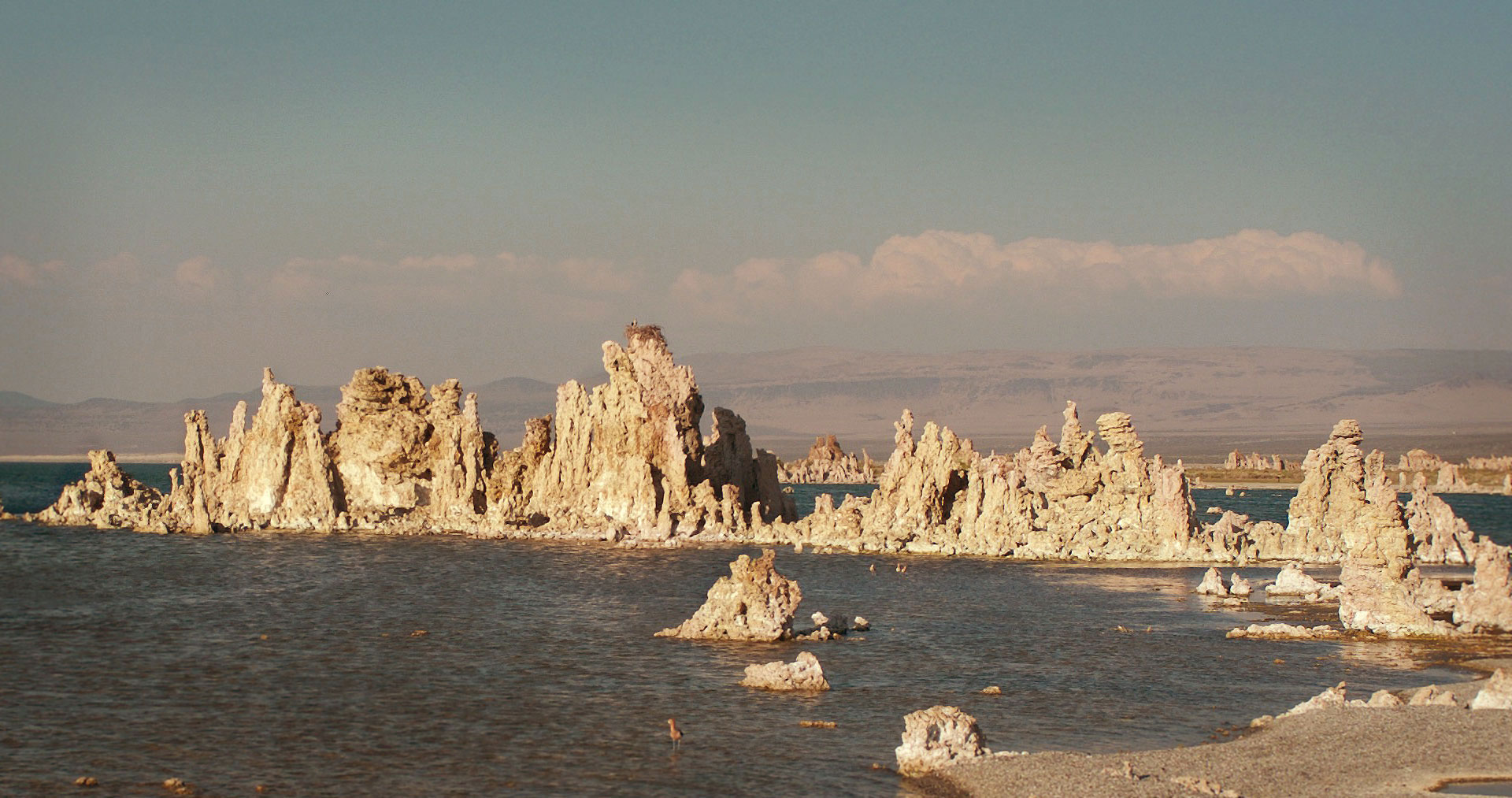
The name Monolake has been chosen after a missed attempt of Gerhard and myself to visit the Mono Lake whilst travelling the United States in summer 1994.
Performing Monolake Live
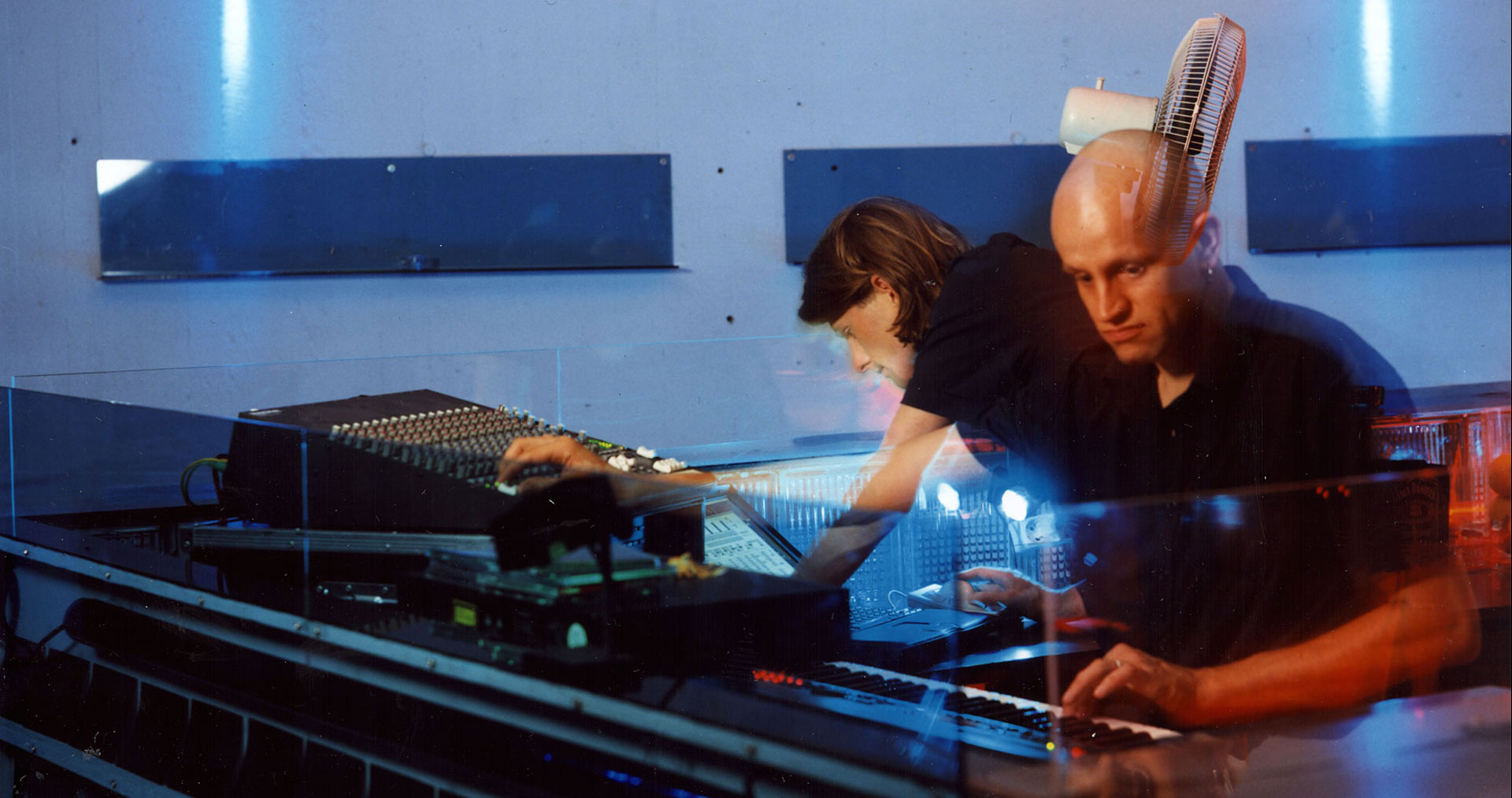
From 1995 - 2000 a live concert meant carrying around several synthesizers, a sampler, a mixing desk, audio effects and a drum computer as sequencer. For the first gig in Berlin the equipment used consisted of a Yamaha TG-77 for drums, a Roland Juno-6, a Waldorf Microwave, and an ASR-10R sampler. All instruments where triggered from a Roland TR-505 drum computer, mixed with a Roland rack mixer and refined with a Lexicon PCM 80 and an Alesis Quadraverb.
Shortly after, our performances got more complex, made possible by a laptop running the Max software with a sequencer we wrote. When Gerhard left the project to focus entirely on Ableton, a new and faster laptop allowed me to extend the MaxMSP based sequencer with a simple sampling and mixing environment. No more carrying of heavy instruments! Between 1999 - 2007, Monolake became a classic 'laptop act': one person behind a screen, with laptop, audio interface and MIDI controller.
The MaxMSP patch naturally got replaced by Ableton Live in 2001.
The demand for more visual representation, pushed by emerging AV festivals, lead to the addition of generative graphics, produced by a small visual engine, the MLVG or Monolake Video Generator. I wrote it in 2002 and used it till 2007.
In 2002 during a Japan tour I visited the electronic stores at Akihabara / Tokyo and bought a bunch of beautiful illuminated switches. I built a MIDI controller for my live performances with them, the Monodeck. In 2006 it got replaced by a dramatically improved version, Monodeck II. Performing with the Monodeck II had a dramatic impact on the level of improvisation possible. I gave up touring with it in 2010, mainly due to its weight. It was heavy...
Inspired by the reception of other multichannel performances such as 'Layering Buddha', Monolake Live got refined into a surround sound version in 2009. Since that time almost all performances became immersive multichannel setups, including a variant for wave field synthesis in 2009. In the same year, a new collaboration started: Visual artist Tarik Barri became part of the performances. He contributed to Monolake Live from 2009 till 2014.
Unlike other projects with a more distinct topic such as 'CBM8032AV' or the Lumiere series, Monolake Live has always been in a state of change. When a new studio album as Monolake has been released, the performances focused on material from that album. At other times it gradually morphed from one set of musical themes and sounds to a different one over several years.